
Case study
VAACE, Venus Aerobot for Atmospheric and Cloud Exploration
Chief Engineer · NASA seed-funded · Aug 2024 to Present
- Systems Engineering
- SolidWorks
- FMEA
- Flight Operations
- Stakeholder Management
- Hardware and Software Integration
- Electronics and Firmware
- Testing and Assembly
The problem
Venus has an atmospheric band in its cloud layer, roughly 50 to 55 km up, where the temperature and pressure are close to Earth's. That makes it one of the more realistic places to explore the planet up close, and variable-altitude balloons, called aerobots, are the usual way to reach it. The problem is that the same layer is full of sulfuric acid, and the constant thermal and mechanical cycling slowly breaks down the balloon's envelope. Once that envelope tears there is no way to fix it mid-flight, so most designs carry extra material and hope it holds. VAACE closes that gap with an onboard system that repairs the envelope in situ, without interrupting the in-flight operations.
Phase 1: what flew
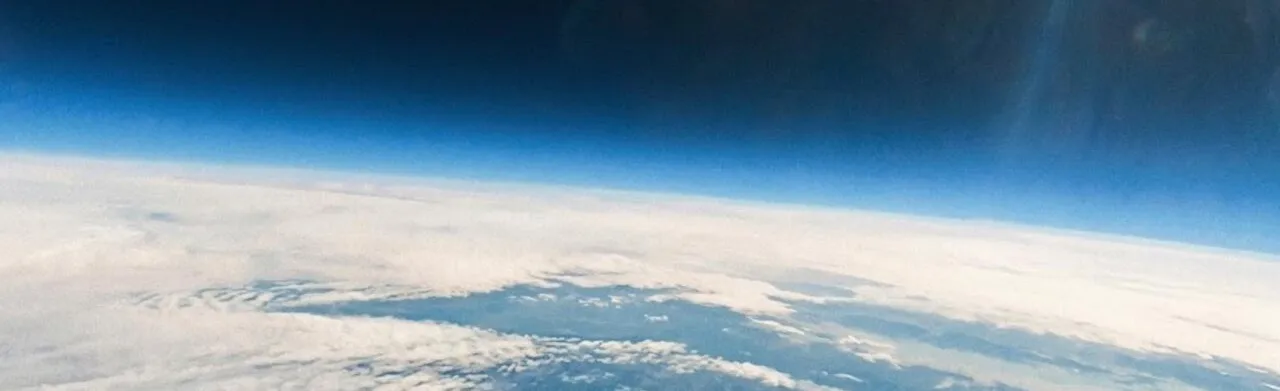
Before touching the repair problem, the team needed to prove it could build something that survives near-space and comes back. An in-house built scientific payload flew to 27 km (90,000 ft) on a weather research balloon, ran for 3+ hours collecting temperature, pressure, CO2, radiation, and GPS data, and was recovered intact with a full data record. As Chief Engineer, I owned the technical direction across the team: I led and assisted with the design of the payload assembly in SolidWorks and manufacturing of the housing and structural parts, oversaw the electrical and software integration, produced the system diagrams, and ran the design reviews that gated each build. On launch day I led flight operations.
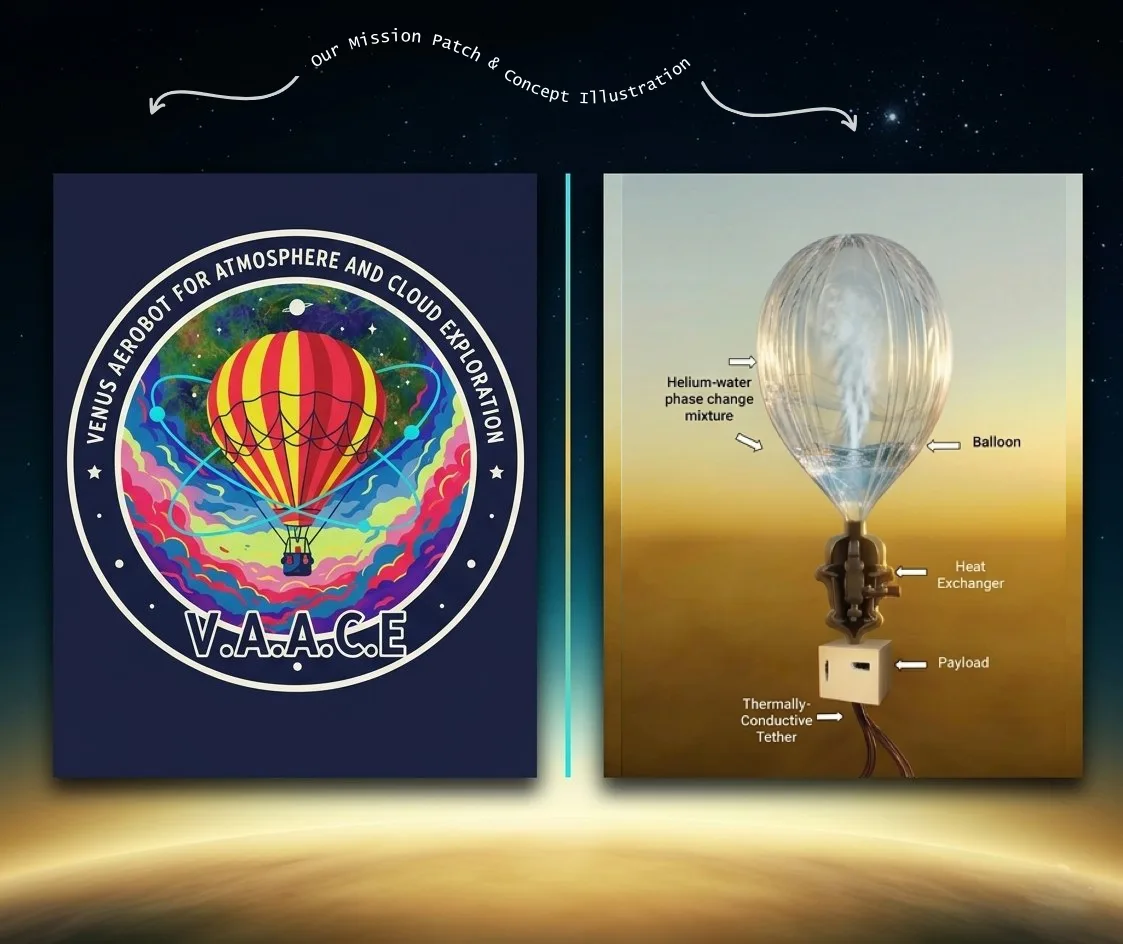
Alongside Phase 1 flight ops, the team tested a phase-change buoyancy system using a helium-steam mix for altitude control. It produced measurable thermal cycling and a small altitude change, which identified buoyancy authority as the next thing to solve. The whole phase came in under a $10,000 budget.
Phase 2: what the team is building now
The current focus is the Robotic Skin System, the actual self-repair piece and where most of the engineering work is going. It is an autonomous gantry that carries a sensing head and a heated repair head over the envelope surface. For detection, it fuses an RGB-depth camera with a thermal array on a Jetson Orin Nano to find damage and generate repair coordinates. An ST NUCLEO-G474RE microcontroller handles real-time motion and heating. The repair itself uses a small cartridge heater to bring the damaged area of a shape-memory-polymer envelope up to its recovery temperature, driving the material to close the tear, with an IR sensor holding temperature steady so it does not overheat the surrounding material.
It is a two-tier setup on purpose, one side thinking and one side acting, so the detect-and-repair loop runs on its own. The system is in design now, with fabrication targeted for late September 2026, a bench-level test of the full repair loop by November, and a flight test to 115,000 ft by the end of 2026.
Where it's going
In parallel with Phase 2, the Phase 1 payload enclosure is being hardened against the Venus environment with a layered acid-resistant stack. Sulfuric acid exposure, thermal-vacuum, and vibration testing are planned for 2026. The longer-term goal is an envelope that maintains itself well enough to extend how long an aerobot survives in the Venus cloud layer, moving in-situ repair from a lab demo toward something flight-ready.